


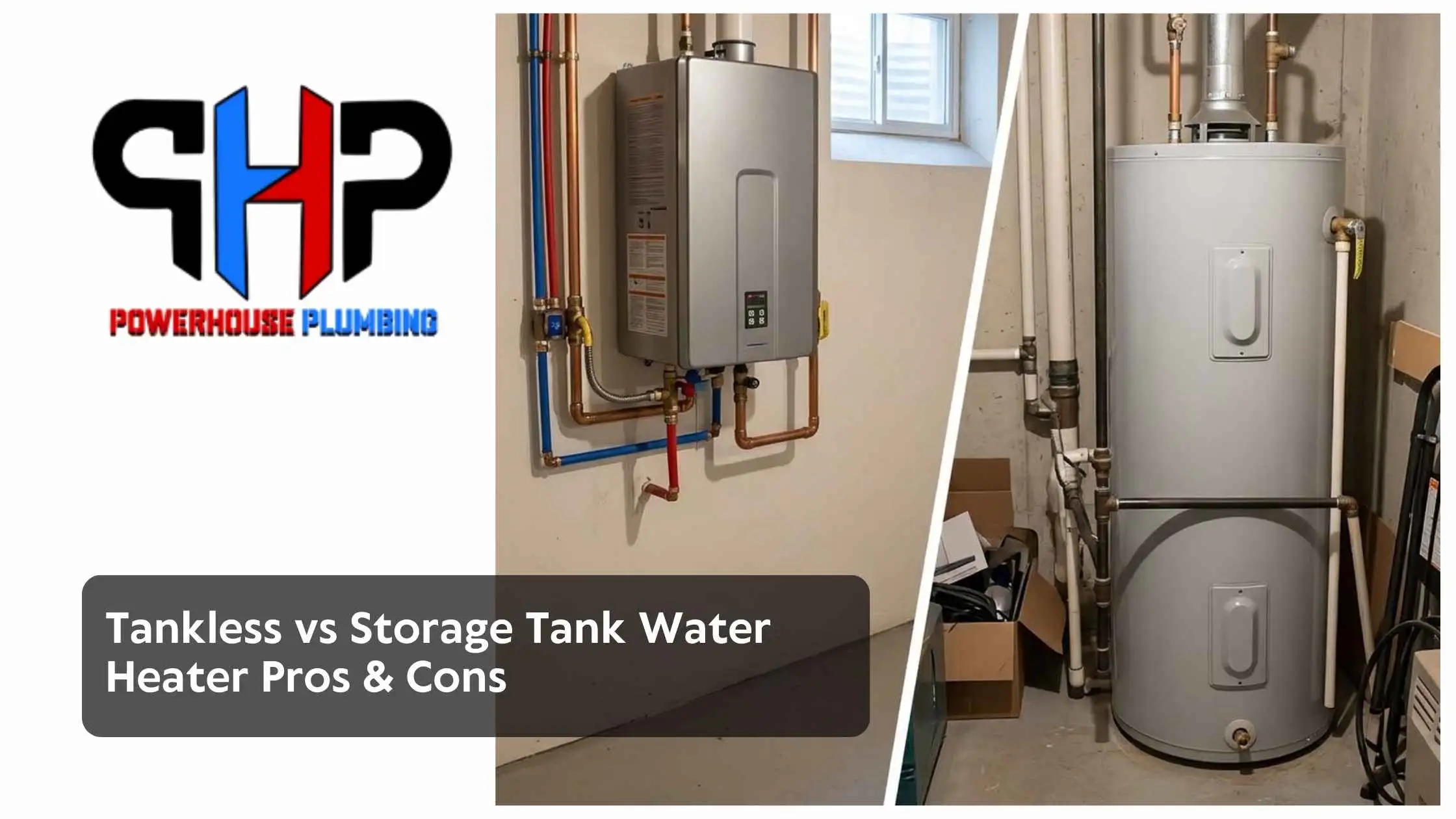
Choosing between a tankless system and a Storage Tank Water Heater can make a difference in your home’s hot water supply, energy use, and long-term plumbing needs. Stockton homeowners have different priorities, from reliable hot water for busy family mornings to reducing energy waste and making better use of limited utility space. Understanding the advantages and disadvantages of both systems helps you make a practical decision.
Powerhouse Plumbing provides professional water heater installation, repair, and maintenance in Stockton and across the Central Valley. Its licensed plumbing team installs and services gas, electric, and tankless water heaters, helping homeowners choose a system that suits their household’s hot water demand.
What Is a Storage Tank Water Heater?
A Storage Tank Water Heater heats and stores a supply of hot water inside an insulated tank. When someone turns on a hot water tap, heated water leaves the tank while incoming cold water enters to be heated.
These systems are common in residential properties because their operation is straightforward and they are available in different capacities and fuel types.
A traditional tank heater can be a practical option for households that want a familiar system without the additional installation requirements that some tankless conversions involve.
Pros of a Storage Tank Water Heater
Lower upfront installation complexity: Replacing an existing tank unit with a similar model may require fewer modifications than converting to tankless.
Simple operation: Storage tank systems use an established design that many plumbers can service.
Stored hot water: The tank provides a ready supply of heated water for everyday household use.
Broad availability: Homeowners can choose from gas and electric models in different sizes.
Cons of a Storage Tank Water Heater
Limited stored supply: Once the tank’s hot water is used, the unit needs time to heat more water. Several showers or appliances running close together can exhaust the available supply.
Standby heat loss: The system uses energy to maintain the temperature of stored water, even when nobody is using hot water.
Larger physical footprint: The tank requires dedicated space, which can matter in smaller utility rooms or homes with limited storage.
Potential tank-related problems: Corrosion, sediment buildup, leaks, and component failure can affect performance as the unit ages.
What Is a Tankless Water Heater?
A tankless water heater heats water on demand rather than keeping a large quantity hot in a storage tank. When a hot water tap opens, the unit activates and heats water as it passes through the system.
Powerhouse Plumbing installs and services gas and electric tankless models and provides professional sizing, installation, repairs, and descaling. The company also handles tank-to-tankless conversions and any required installation upgrades.
Pros of Tankless Water Heaters
Hot water on demand: A properly sized system can provide a continuous supply of hot water while it operates within its flow-rate capacity.
Improved energy efficiency: Tankless systems avoid the standby heat loss associated with storing hot water. Actual savings depend on household usage, fuel costs, and the equipment selected.
Space savings: Without a large storage tank, a tankless unit generally takes up less space.
Potentially longer service life: Tankless units can last longer than conventional storage tank heaters when properly installed and maintained.
Cons of Tankless Water Heaters
Higher installation complexity: A conversion may require changes to gas lines, venting, electrical connections, or other parts of the plumbing system.
Flow-rate limitations: Although the unit heats water on demand, it cannot provide unlimited water flow. Multiple showers and appliances operating simultaneously may exceed its capacity.
Regular maintenance: Mineral buildup can affect performance, making periodic descaling especially important in areas with hard water.
Potentially higher initial cost: Equipment and installation requirements can make a tankless conversion more involved than replacing an existing tank.
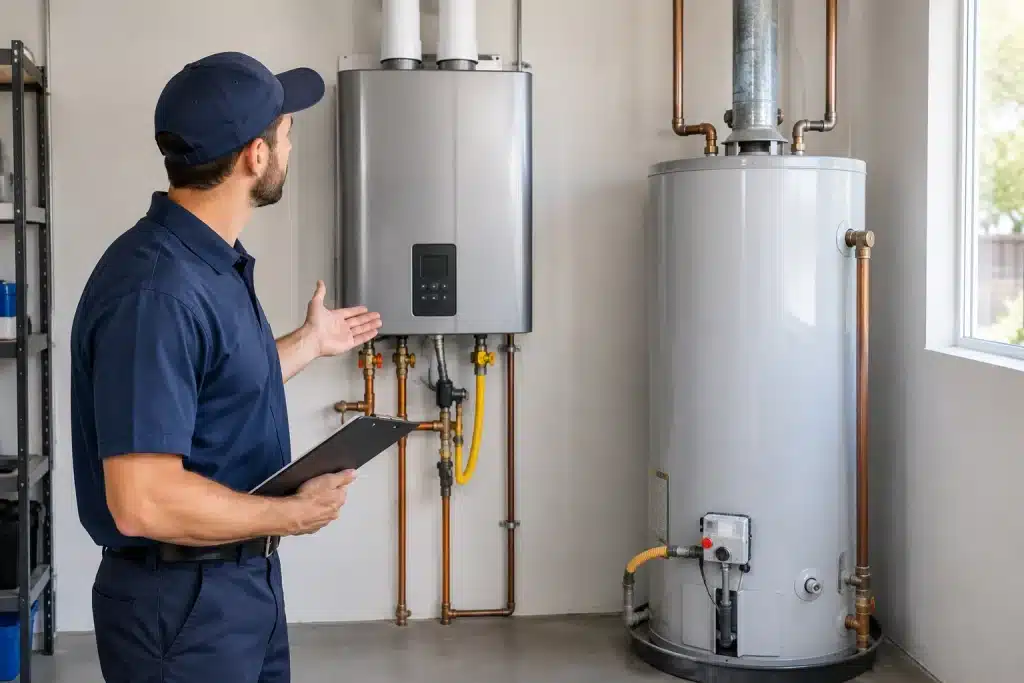
Tankless vs Storage Tank Water Heater: Key Differences
| Feature | Storage tank | Tankless |
|---|---|---|
| How it works | Stores heated water | Heats water on demand |
| Hot water supply | Limited by tank capacity | Limited by flow rate and heating capacity |
| Energy use | Can lose heat while water is stored | Avoids standby tank heat loss |
| Space needed | Requires room for a tank | Generally more compact |
| Installation | Often simpler when replacing like for like | May require system upgrades |
| Maintenance | Tank and components need inspection | Descaling may be needed periodically |
| Best suited for | Homes wanting a familiar, straightforward system | Homes prioritizing space savings and on-demand heating |
Neither system is automatically best for every home. The right choice depends on household size, simultaneous hot water demand, available space, fuel type, installation requirements, and long-term plans for the property.
Which Water Heater Is Better for Stockton Homes?
Stockton homeowners should consider how local water conditions and household routines affect water heater performance.
Mineral content in the water can contribute to sediment buildup inside storage tanks and scale accumulation in tankless heat exchangers. Powerhouse Plumbing identifies mineral buildup as a common concern in the Stockton area and provides water heater flushing, tankless descaling, repair, and replacement services.
Consider Your Household’s Hot Water Demand
A household with several bathrooms may need hot water for showers, laundry, and dishwashing around the same time. A properly sized tankless unit may suit this pattern, but its flow rate and heating capacity must match the demand.
A household with more predictable hot water use may find a storage tank system more practical, provided the tank has enough capacity to meet daily needs.
Think About Available Space
If a utility room is crowded or floor space is valuable, a tankless system may offer an advantage. However, installation location, venting, service access, and manufacturer requirements must all be considered.
Evaluate the Existing Setup
If your home already has a storage tank heater, replacing it with another appropriately sized tank may be relatively straightforward. Switching to tankless can involve additional work, depending on the existing gas supply, electrical service, venting, and installation location.
A professional assessment helps identify these requirements before you choose a system.
Which Option Costs Less Over Time?
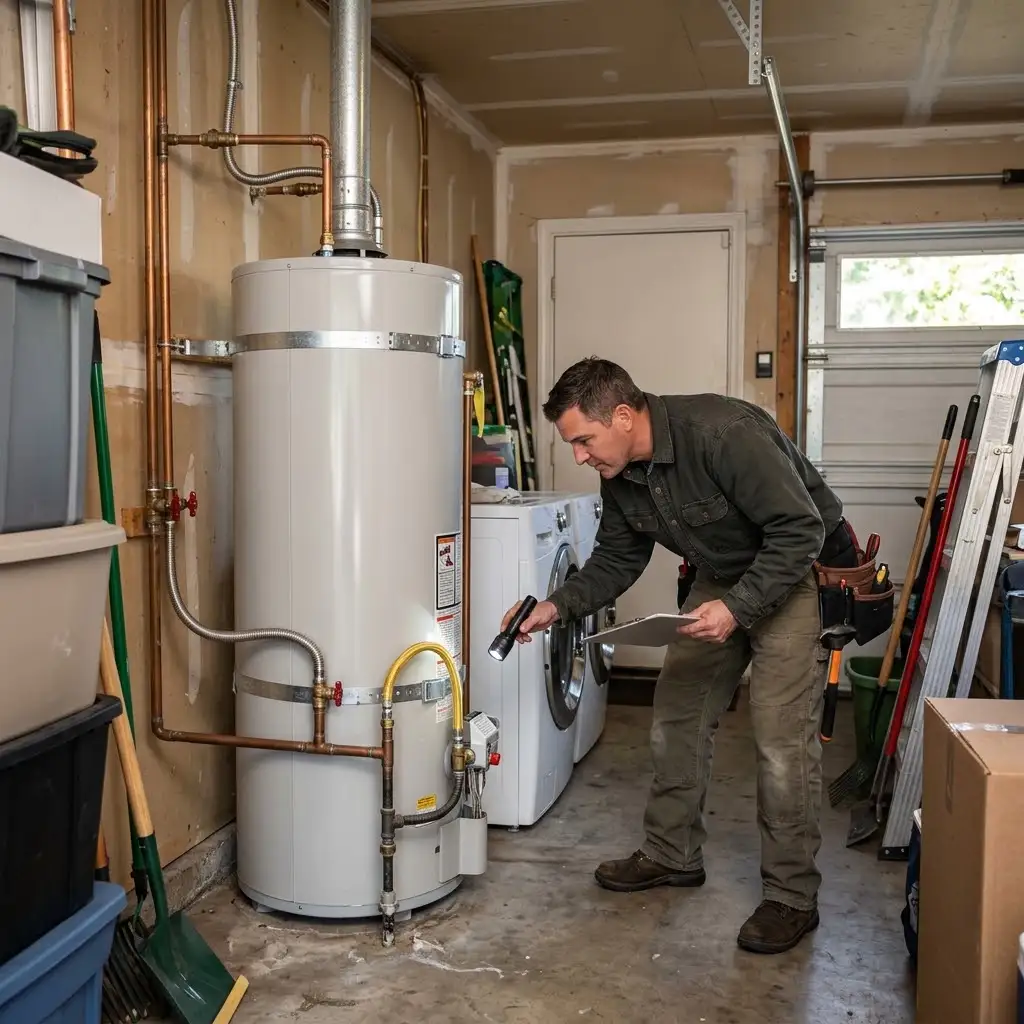
The total cost of a water heater goes beyond the purchase price. Homeowners should consider installation, energy use, maintenance, repairs, and expected service life.
A storage tank system may have a lower initial installation cost when an existing unit is replaced with a similar model. A tankless system may offer energy savings over time, but those savings depend on household usage, utility rates, equipment efficiency, and the cost of any required upgrades.
Maintenance also matters. Tank heaters may need periodic flushing and component inspections, while tankless systems often require descaling to manage mineral buildup.
Instead of choosing based on one factor, compare the full cost of ownership for your home’s specific circumstances. Powerhouse Plumbing offers written estimates so homeowners can understand the work involved before approving an installation.
When Should You Replace Your Existing Water Heater?
A water heater may need repair or replacement when it stops producing enough hot water, delivers inconsistent temperatures, develops a leak, or makes unusual popping and rumbling sounds.
Powerhouse Plumbing recommends considering the unit’s age, repair history, and repair cost when deciding between repair and replacement. Repeated failures or substantial deterioration may make replacement a more sensible long-term option.
A professional plumber can inspect the heater, identify the problem, and explain whether repair or a new system is appropriate.
Why Professional Water Heater Installation Matters
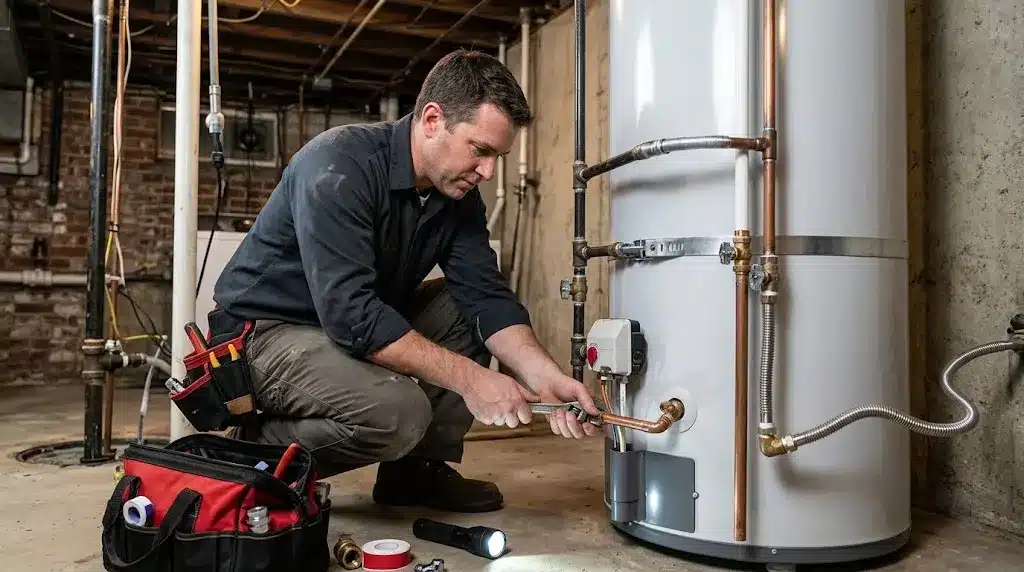
Both tankless and storage tank systems require correct sizing and safe installation. An incorrectly sized unit may struggle to meet household demand, while improper connections or venting can create serious problems.
Professional installation helps ensure that the selected heater is compatible with the home’s fuel supply, plumbing connections, electrical requirements, and applicable California codes. Permits and inspections may also be required, depending on the project.
Powerhouse Plumbing is CSLB licensed and insured and provides water heater installation, repair, and maintenance throughout Stockton and nearby Central Valley communities. The company also offers tankless sizing, tank-to-tankless conversions, and maintenance for major brands.
Choose the Right Water Heater for Your Home
Deciding between a tankless unit and a Storage Tank Water Heater starts with understanding your household’s needs.
A traditional tank may be the practical choice when you want a familiar system and a straightforward replacement. Tankless may be worth considering when you value space savings, on-demand heating, and the potential to reduce standby energy losses.
Before making a decision, consider your hot water demand, existing plumbing setup, maintenance needs, and installation requirements.
Powerhouse Plumbing provides water heater installation, repair, and maintenance in Stockton and throughout the Central Valley. Its licensed team can assess your existing system, explain the available options, and provide a written estimate for the work.
Call (209) 395-6303 to discuss your water heater needs or schedule a professional assessment.
FAQs About Tankless and Storage Tank Water Heaters
Is a Storage Tank Water Heater better than a tankless system?
It depends on your home. A storage tank may be a practical choice for straightforward replacement and predictable demand. Tankless may be preferable when space savings and on-demand heating are priorities.
Does a tankless water heater provide unlimited hot water?
Not without limits. A properly sized tankless system can heat water continuously while operating within its flow-rate and heating capacity. Excessive simultaneous demand can reduce performance.
Which water heater is more energy efficient?
Tankless systems generally avoid standby heat loss and may use less energy, but actual savings depend on household usage, fuel type, equipment efficiency, and installation.
How often does a tankless water heater need maintenance?
Maintenance needs vary by model and water conditions. Powerhouse Plumbing recommends annual descaling for tankless units, particularly in areas where mineral buildup is a concern. Follow the manufacturer’s maintenance instructions for your specific model.
Can I replace my tank water heater with a tankless model?
Yes, in many homes. However, conversion may require gas-line, venting, electrical, or other upgrades. A licensed plumber can determine what is needed before installation.
Does Powerhouse Plumbing install both types of water heaters?
Powerhouse Plumbing provides water heater repair and replacement services for gas, electric, and tankless units in Stockton and nearby Central Valley communities. Contact the company to discuss the best option for your home.

